Interaction Design & User Research
Spåtify
Project Overview & Acknowledgements
2022
Project done at the IT University of Copenhagen in the course Advanced Design Processes. Done in collaboration with my study group .
Project brief - redesign a technology
What is the relationship between the users and the algorithm? How can you redesign the interaction with the Spotify algorithm to heighten the sense of magic and explore our relationships with these complex systems.
Skills
User Research – Investigated user relationship with the Spotify algorithm through interviews, diaries and probes.
Prototyping (Arduino & Figma) – Developed a functional prototype integrating hardware (Arduino) and designed Figma elements.
Qualitative Research & Data Analysis – Conducted user testing at a design expo, analyzing engagement.
Project description
"Spå", Danish word
for fortune telling
What if the algorithm was embodied by an artefact, and users could interact with it? To explore this idea, we developed the concept Spåtify. During the development of our concept, we felt inspired by magic, as we saw a connection between the blackboxed nature of a algorithm and a crystal ball. We were interested in gaining more knowledge about the relationship between the user and the algorithm.
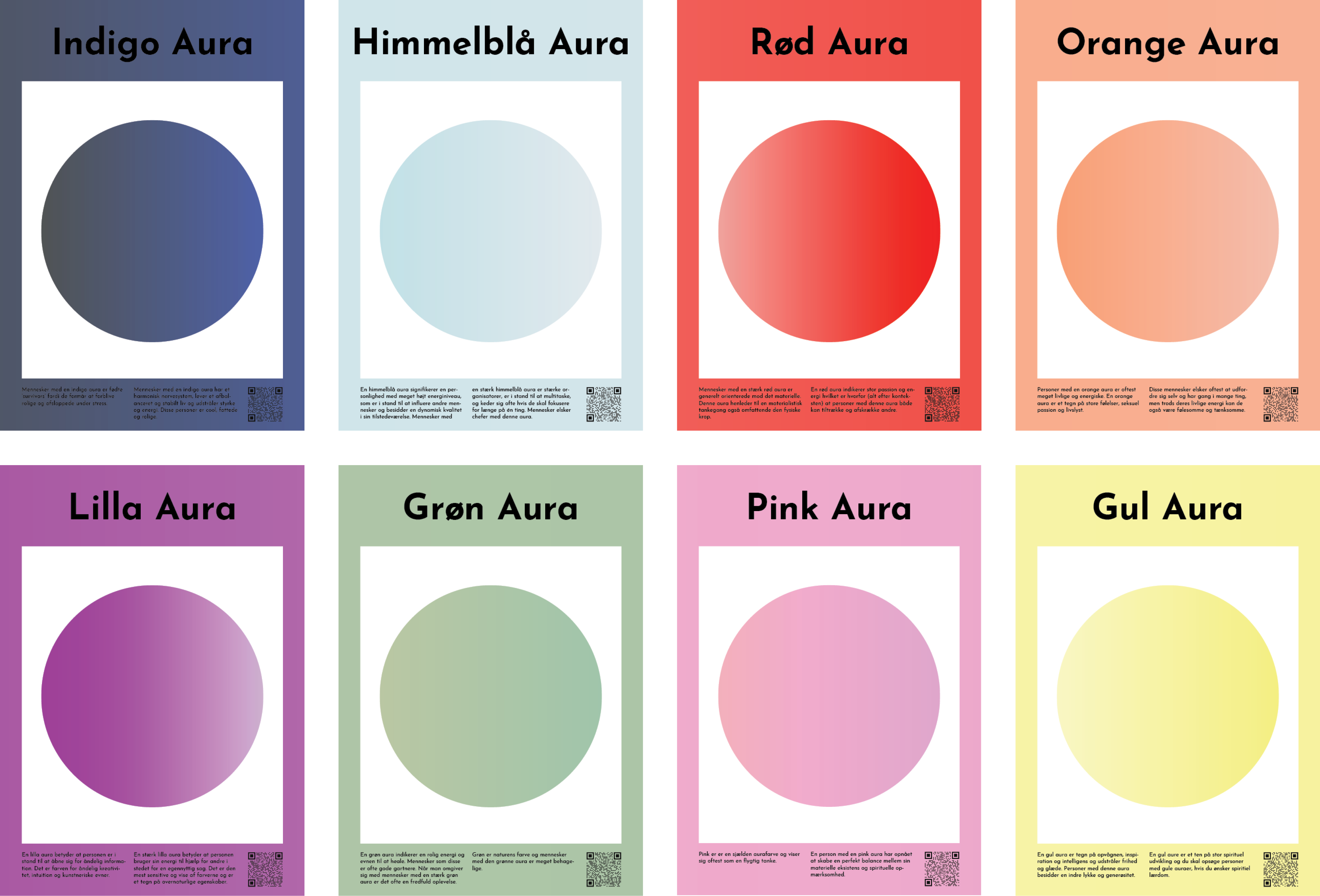
Spåtify “reads” the aura of the user, randomly assigning them one of the eight most common aura colors. The color you’re assigned will determine the playlist you are linked. Each playlist has a unique description based on the common understanding of the given aura color, amongst the aura-enthusiast-online-community.
Our research showed that hiding randomness behind an interaction inspired by a spiritual ritual, is a great way of making users feel understood and heard. In december 2022 , we participated in a design expo. Here 24 of the people that tried our prototype are still following the Aura-playlist they were given by Spåtify, bearing witness to impression our prototype left on the users.
Many users were baffled at how well their aura-reading and playlist fit their understanding of self, and were left wondering how on earth the inner workings of the ball functioned. In other words, the project is an examination of what happens when algorithmic obscurity is repackaged as something spiritual or magical.
Interactive prototype
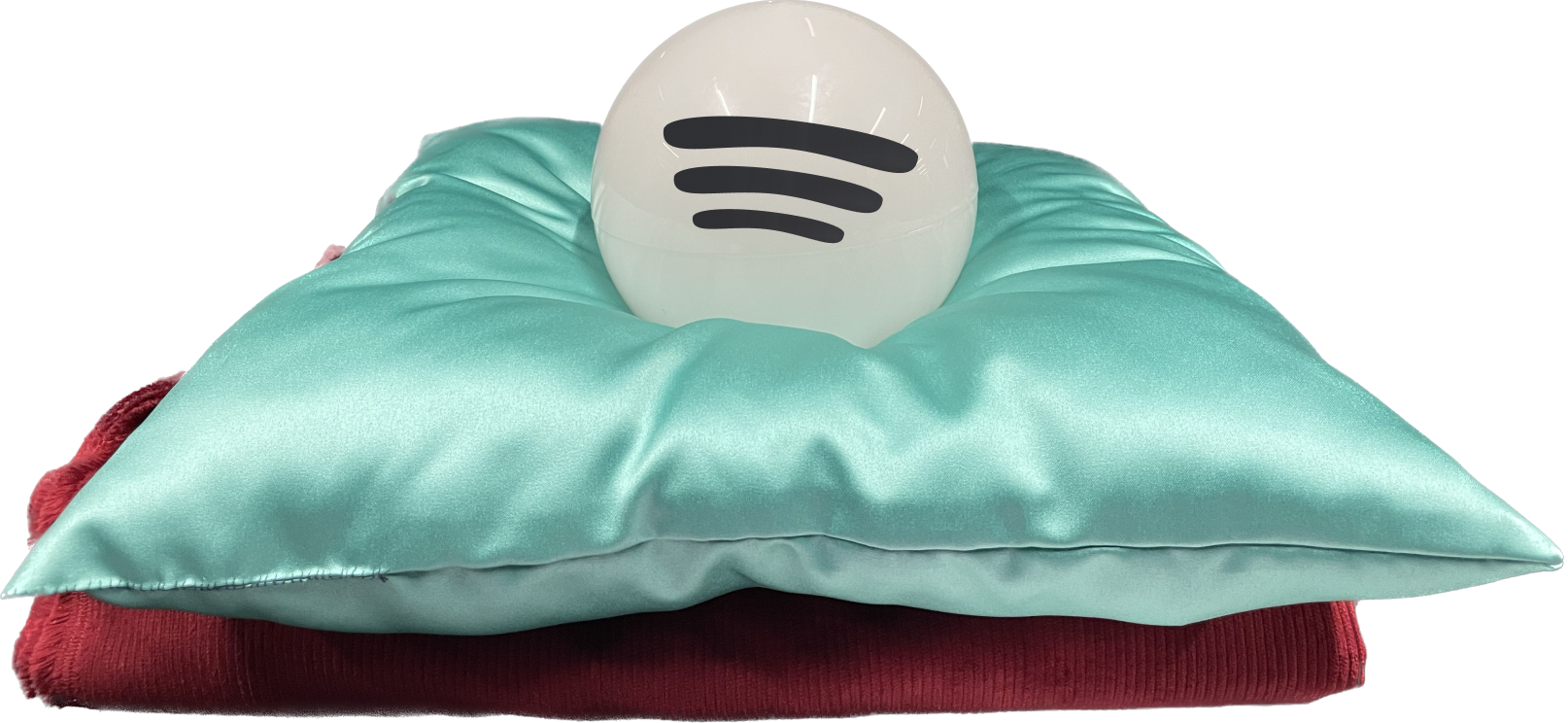
The artefact is a Spotify-branded crystal ball, created by hiding an LED strip and a touch capacitive sensor within a glass ball. This ball sits upon a turquoise pillow. The I/O-combination is controlled by a simple Arduino program. Using the touch capacitive sensor as the mode of input allowed us to make the artefact feel alive and explore its expression, as it activated before the user physically touched the ball. This added another element of magic to our prototype.
Pictured below is the posters we presented, each with a personality description based on Aura colour, and a QR-code link to the corresponding playlist